Launch offer — valid today only

📄 Digital book in PDF · read it on your phone or print it

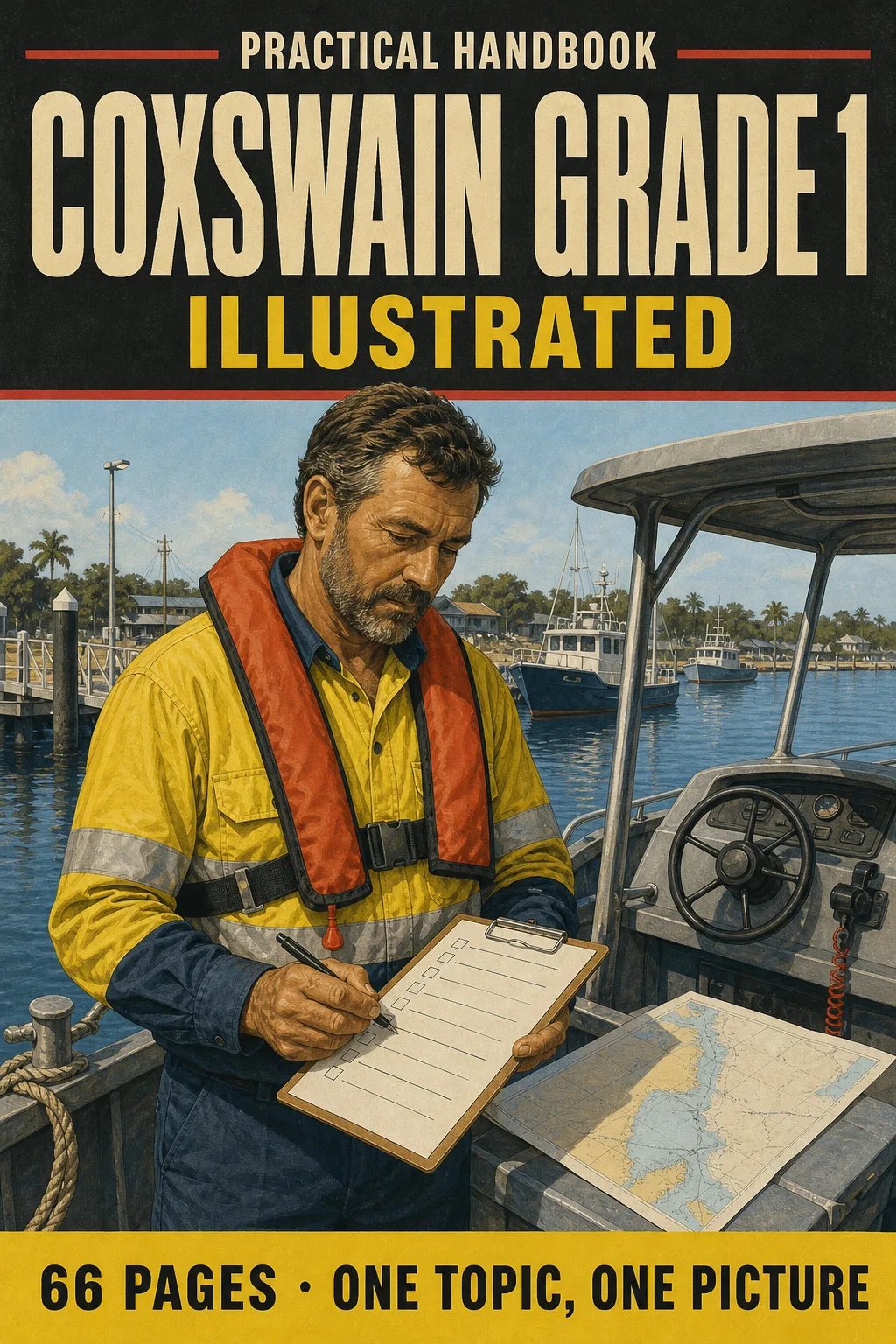
The Coxswain Grade 1 Near Coastal Exam in Drawings One Rule per Page, Explained in the Same 3 Steps

For the Australian Coxswain Grade 1 Near Coastal: collision rules, night lights, cardinal marks, course to steer, the rule of twelfths, stability, person overboard and bar crossings. Built on AMSA's requirements and IALA Region A. Every topic has its own page: the drawing first, then what you need to remember. 66 illustrated pages.

START STUDYING THIS WAY

🔒 Secure checkout · PDF by email · 30-day guarantee

Every topic, its own pageEach rule drawn from above, with the explanation beside it
66 illustrated pages8 parts, from your ticket and the oral exam to the exam-day review
Up-to-date sourcesAMSA requirements (Marine Order 505), the COLREGs and IALA Region A
PDF by emailFormat

Look Inside the Book

Every page has one big drawing and a box with the rules and numbers you need to know:

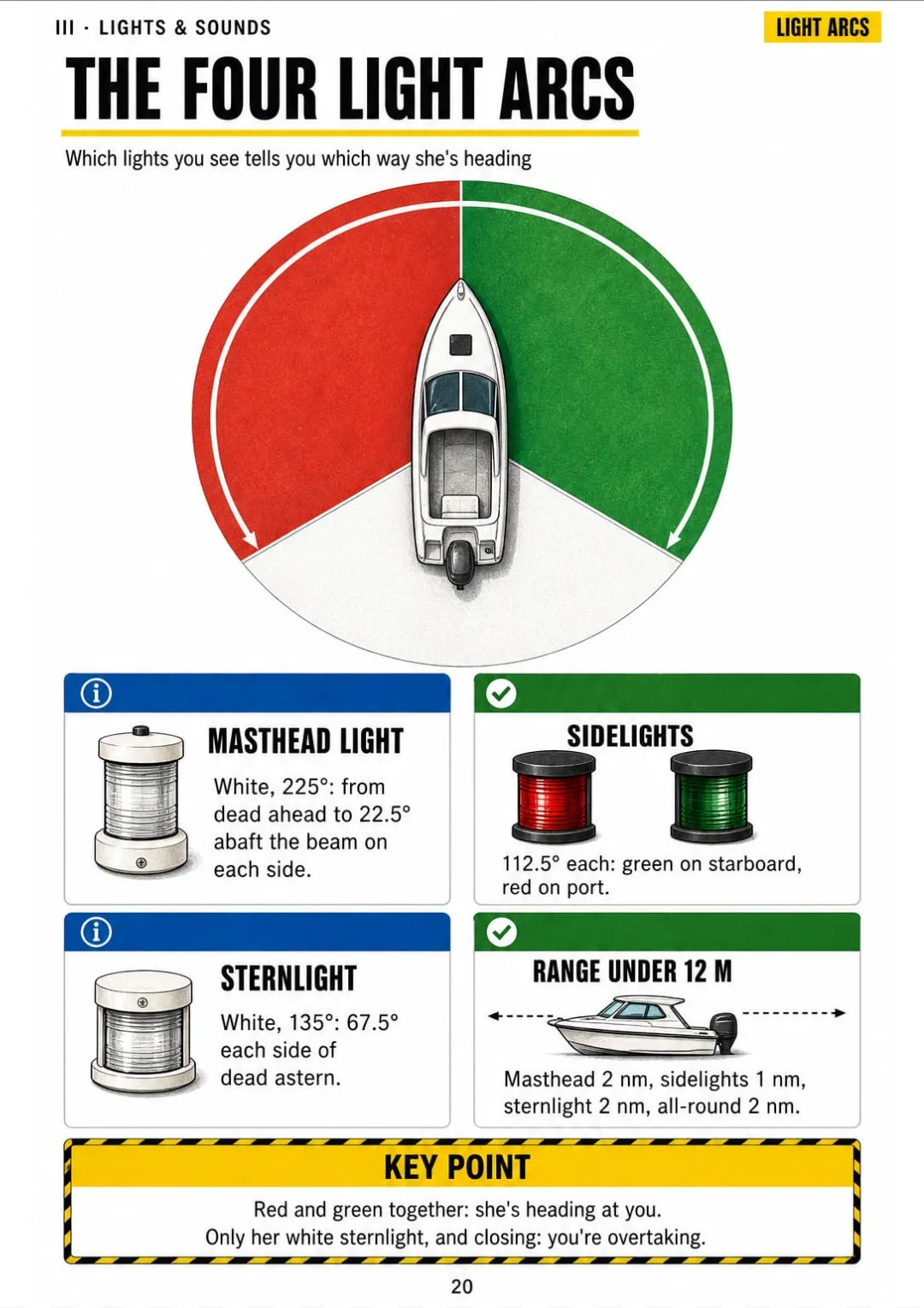
Masthead 225°, sidelights 112.5° each, sternlight 135°, all-round 360°, drawn around one vessel.
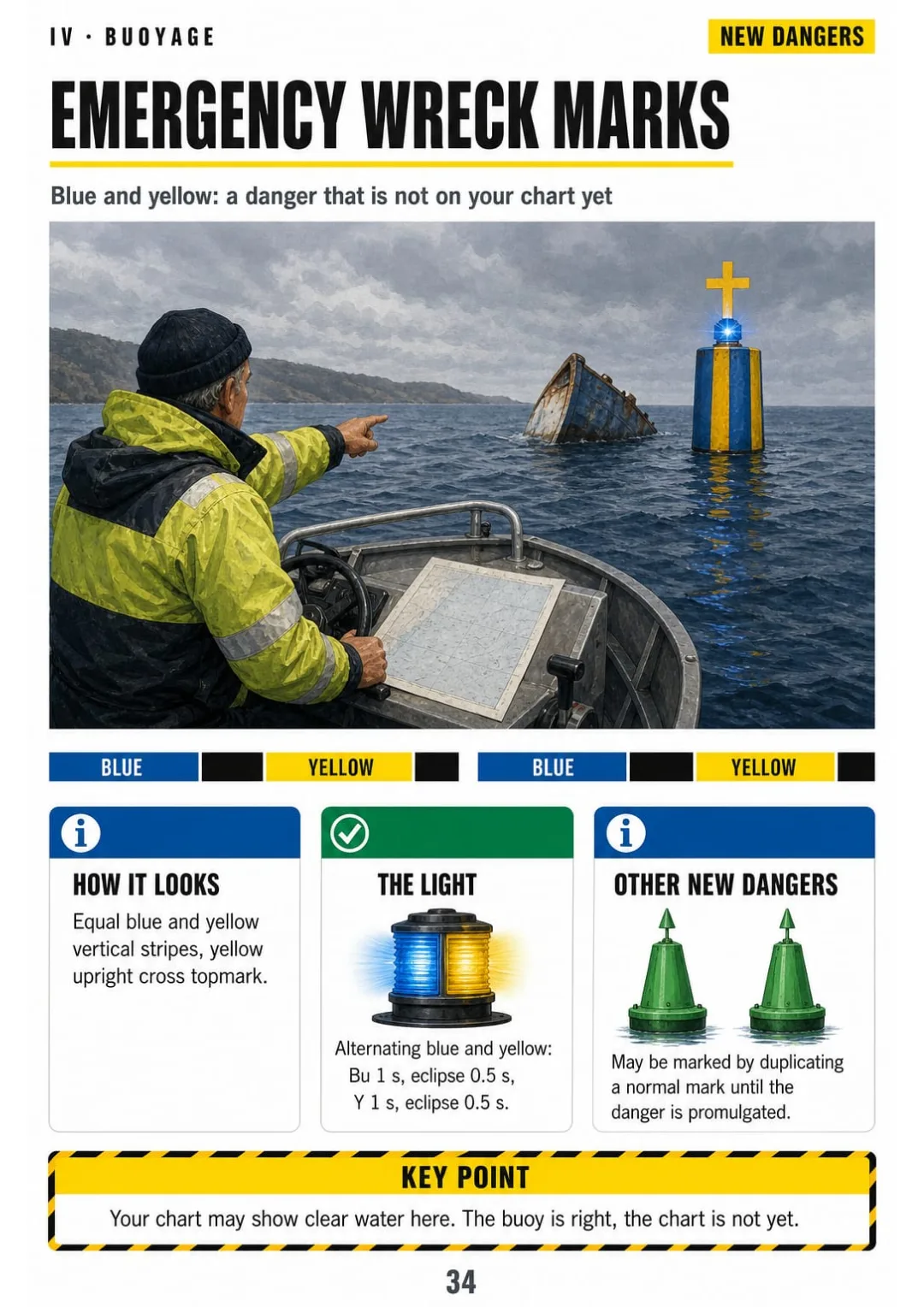
Emergency wreck buoy: blue and yellow stripes, yellow cross, alternating blue and yellow light.
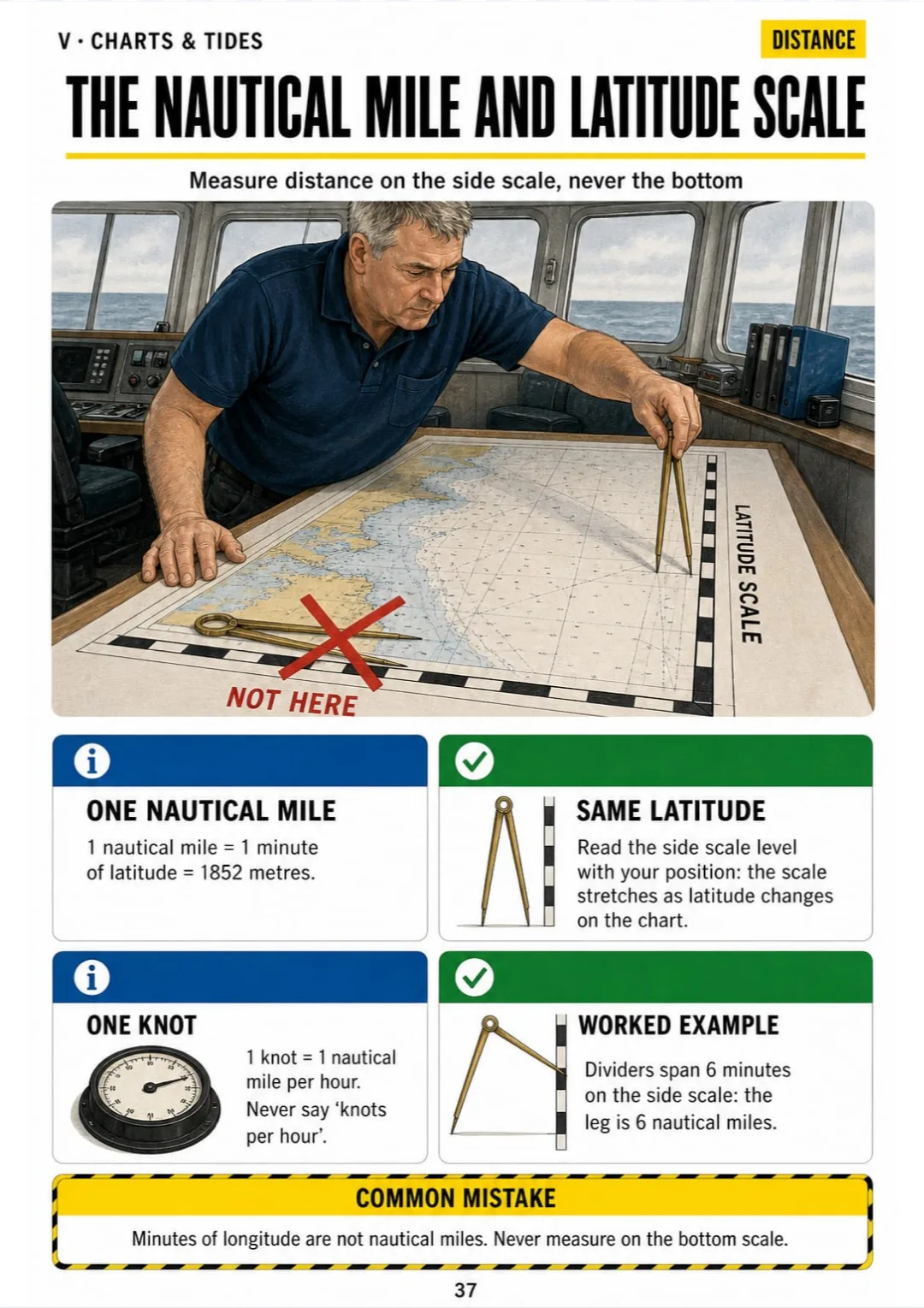
1 nm = 1 minute of latitude = 1852 m, read on the side scale.
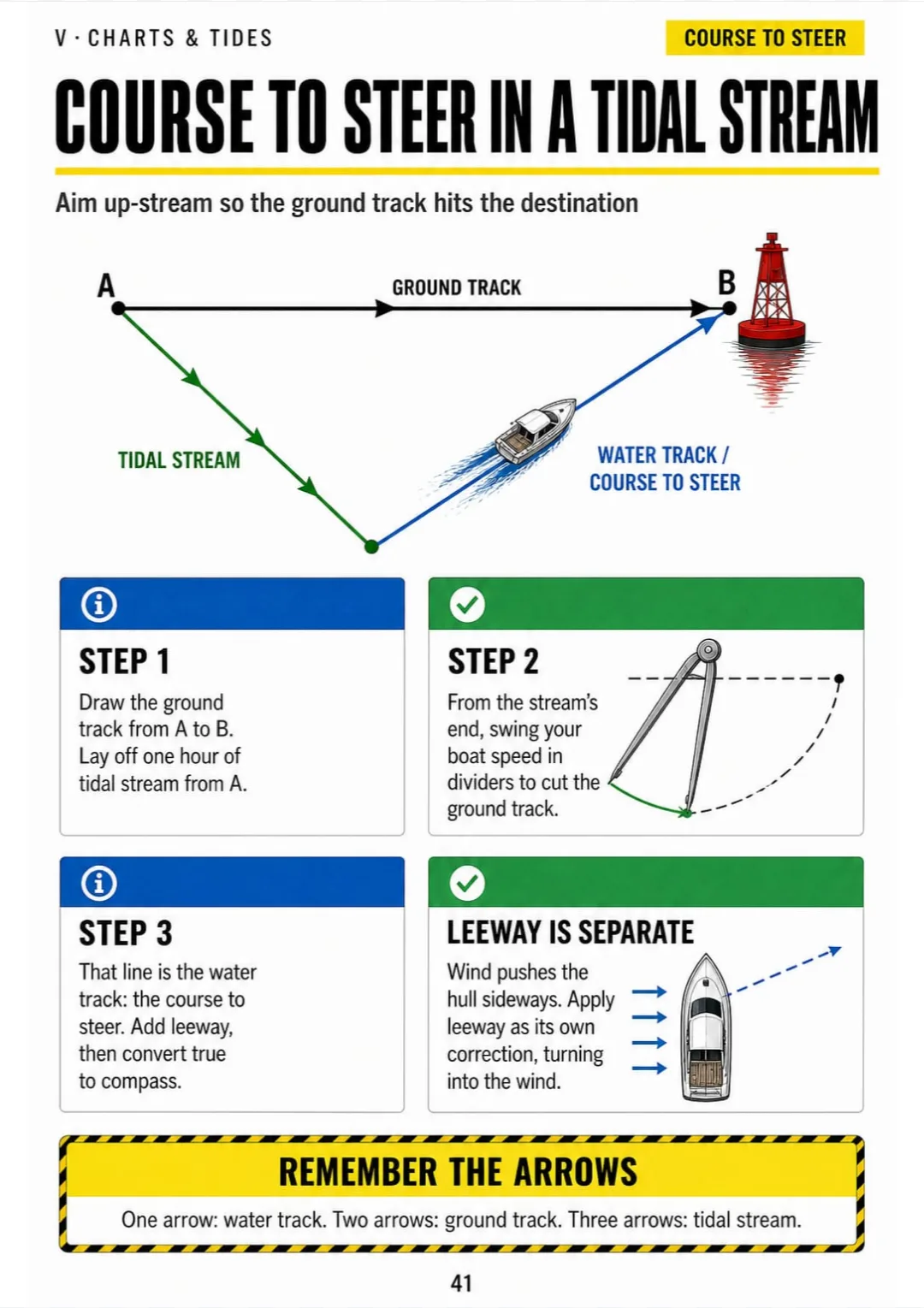
Counter a 1.5 knot set: steer the water track, follow the ground track.
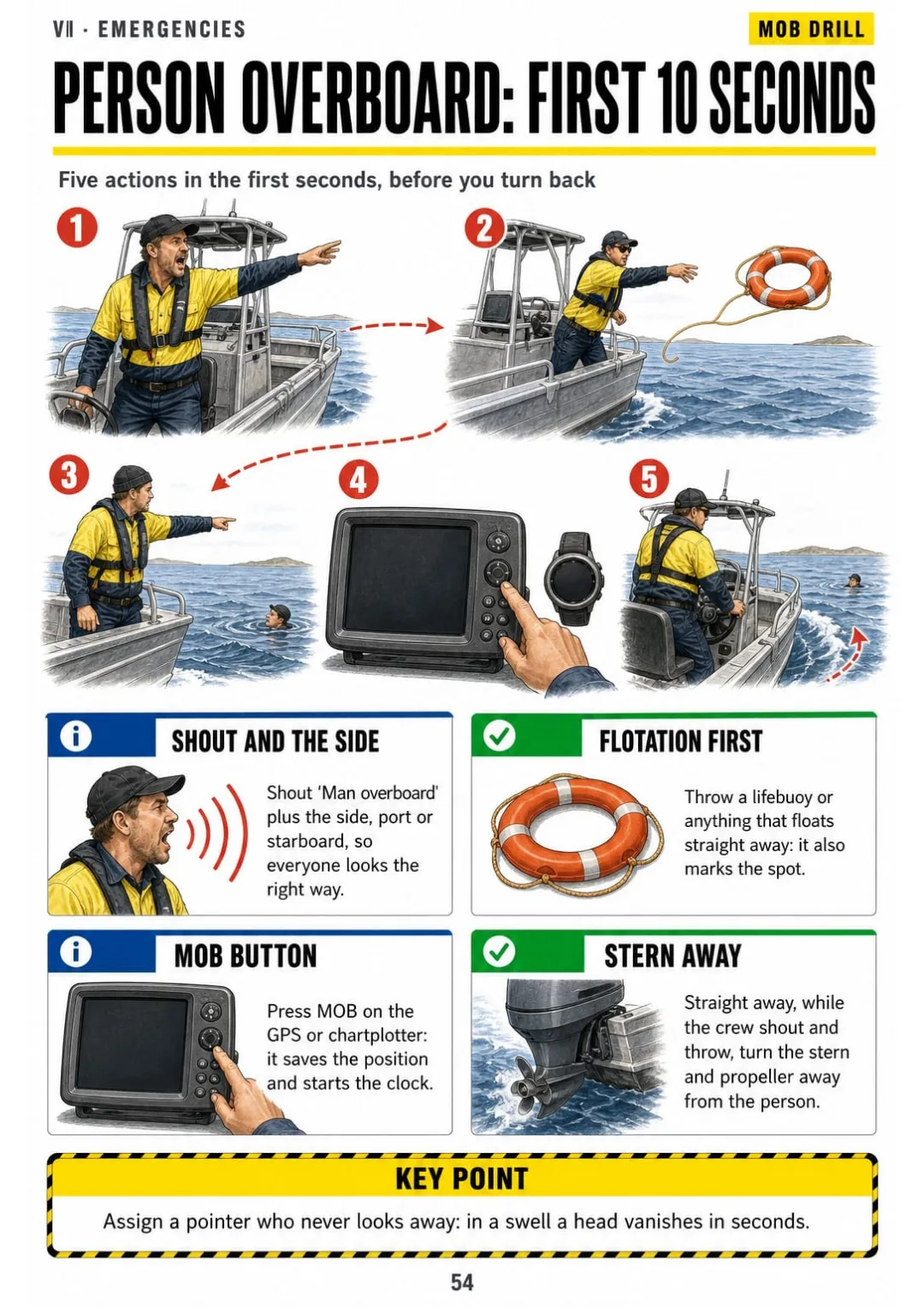
The person-overboard drill in 5 drawn steps, from the shout to swinging the propeller clear
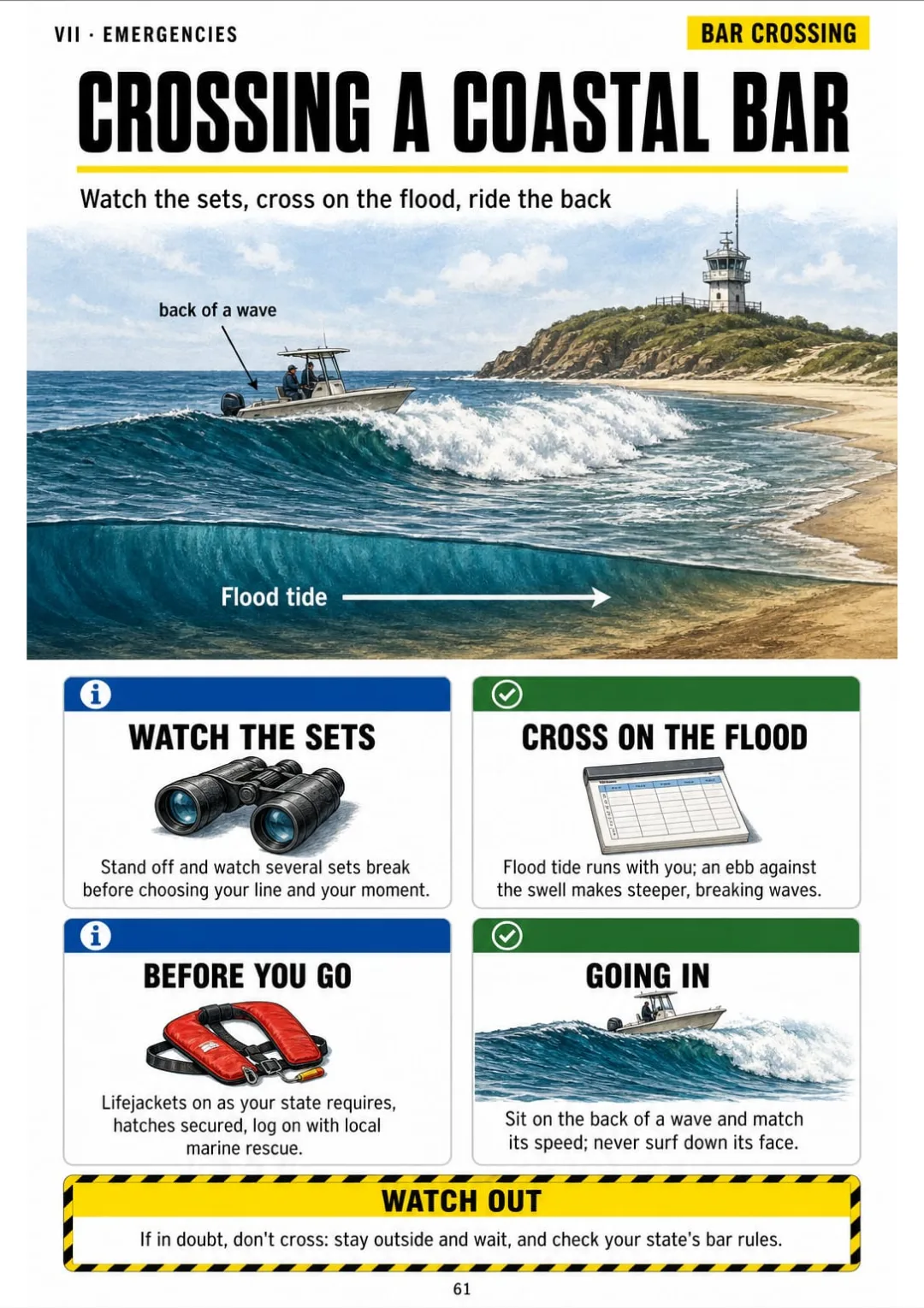
Coastal bar crossing from above: best line, flood tide, logging on, riding the back of a wave
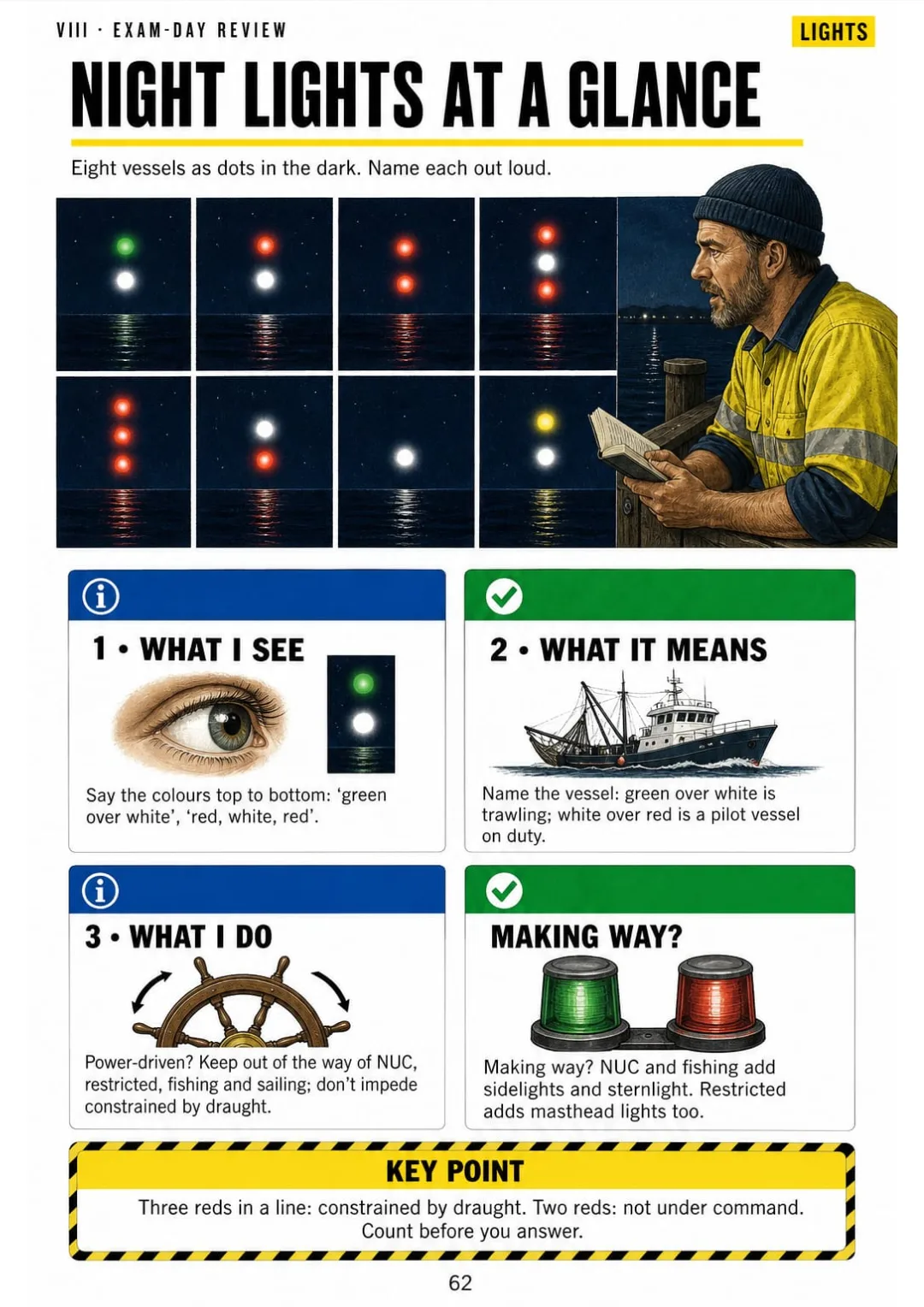
Green over white, red over white, red-white-red: eight night vessels to drill out loud.
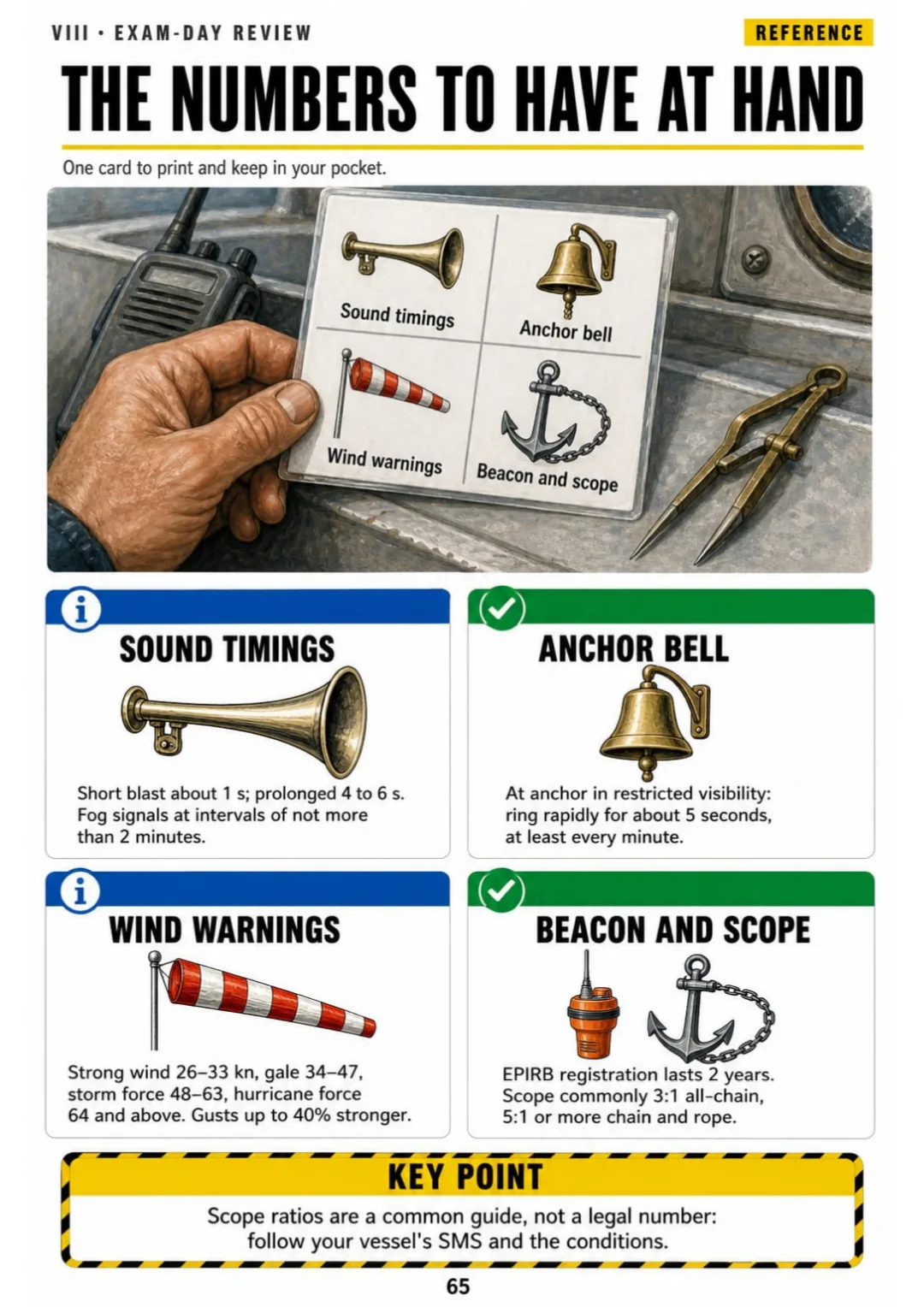
225°, 22.5°, 1852 m, 1-2-3-3-2-1, 26/34/48/64 kn, VHF 16: one reference card.

Swipe to see more →

These are real pages from the book. The table of contents is the full one: 8 parts and 62 topics.

The Problem Isn't You. It's How It Was Explained to You.

You're at the chart with a 1.5-knot stream setting across your track. The examiner slides the dividers over and waits: what course do you steer?

You've read it in the manual. There it's three paragraphs on set, drift and vectors, with one small diagram at the bottom. Under pressure, paragraphs don't turn into lines on a chart.

1 nm = 1 minute of latitude = 1852 m, read on the side scale.

In the book it's one page. The ground track is drawn, the tide arrow is laid off from the start, and the boat's speed swings across to meet it. Steer the water track, follow the ground track.

The same goes for cardinal topmarks, the four light arcs, who gives way in a crossing, the rule of twelfths and the person-overboard drill. Each one has its own page.

You see the triangle, you understand why it works, and you plot it at the table without going back to the manual.

COMPARE FOR YOURSELF

The Same Topic, Two Ways to Study It

THIS
  • The manual: line after line
  • Cardinal marks explained only in words
  • You walk into the oral exam unsure
Cardinal marks indicate that the deepest or safest navigable water lies on the side of the mark corresponding to the cardinal point after which it is named. The topmark consists of two black cones displayed one above the other. In the case of the north cardinal mark both cones are directed upward, whereas on the south cardinal mark both are directed downward. The east cardinal mark carries the cones base to base, while the west cardinal mark displays them point to point, the black bands being positioned in accordance with the orientation of the cones.
FOR THIS
  • Each cardinal mark in one drawing
  • Topmarks and colours in one box
  • You see it and it makes sense
Emergency wreck buoy: blue and yellow stripes, yellow cross, alternating blue and yellow light.
CONTENTS

Take a Look at the 8 Parts and 62 Topics

Your ticket and method, the collision rules, lights and sound signals, IALA Region A buoyage, charts and tides, weather and stability, emergencies and the exam-day review: 66 pages, all illustrated.

IYour Ticket, Your Vessel, Your Method · pp. 5-10
  1. What the Coxswain Grade 1 Near Coastal lets you do
  2. How the oral exam works
  3. The 3-step answer: what I see, what it means, what I do
  4. Parts of the vessel and the words the examiner uses
  5. General safety duties and your safety management system
  6. Pre-departure checks in the same order every time
IIThe Collision Rules · pp. 11-19
  1. Lookout and safe speed (Rules 5 and 6)
  2. Is there a risk of collision? (Rule 7)
  3. Action to avoid collision (Rule 8)
  4. Head-on: both alter to starboard (Rule 14)
  5. Crossing: the one with the other on her starboard side gives way (Rule 15)
  6. Overtaking: the overtaking vessel keeps clear (Rule 13)
  7. Give-way and stand-on: what each must do (Rules 16 and 17)
  8. Who keeps out of whose way (Rule 18)
  9. Narrow channels, traffic separation and restricted visibility (Rules 9, 10 and 19)
IIILights, Shapes and Sound Signals · pp. 20-28
  1. The arcs: masthead, sidelights, sternlight
  2. Power-driven vessels underway
  3. Sailing vessels and boats under oars
  4. Towing and pushing
  5. Fishing vessels: trawling versus other fishing
  6. Not under command, restricted, constrained by draught
  7. At anchor, aground, pilot vessels and dredgers
  8. Manoeuvring sound signals in sight of one another
  9. Sound signals in restricted visibility
IVBuoyage: IALA Region A · pp. 29-35
  1. Lateral marks: red to port when entering
  2. Preferred channel marks
  3. Cardinal marks: the topmarks
  4. Cardinal marks: the lights as a clock face
  5. Isolated danger, safe water and special marks
  6. Emergency wreck marks and new dangers
  7. Reading a light's characteristics on the chart
VCharts, Navigation and Tides · pp. 36-45
  1. Reading an Australian chart
  2. The nautical mile and the latitude scale
  3. True, magnetic and compass courses
  4. Distance, speed and time
  5. Fixing your position: bearings and transits
  6. Plotting a course and allowing for tidal stream
  7. Clearing bearings and keeping off danger
  8. GPS, chartplotter and radar: use them, don't trust them blindly
  9. Tides: springs, neaps and the tide tables
  10. Height of tide with the rule of twelfths
VIWeather, Stability, Handling and Engine · pp. 46-53
  1. Reading the forecast and the synoptic chart
  2. Sea state, swell and when to stay in port
  3. Stability: G, B and M
  4. Free surface effect and loading
  5. Anchoring: scope, holding and dragging
  6. Mooring lines and coming alongside
  7. Engine checks before you start
  8. Common engine faults at sea
VIIEmergencies and Drills · pp. 54-61
  1. Person overboard: the first 10 seconds
  2. Person overboard: turning back and recovery
  3. Fire on board and the right extinguisher
  4. Flooding and holing
  5. Distress, urgency and safety calls on VHF
  6. EPIRB, flares and visual distress signals
  7. Abandon ship and the liferaft
  8. Crossing a coastal bar
VIIIExam-Day Review · pp. 62-66
  1. Night lights at a glance
  2. Marks at a glance
  3. Crossing situations: who gives way
  4. The numbers to have at hand
  5. The most frequent mix-ups and the night-before checklist

One Page, One Topic, All Clear

Think of it this way:

It's the oral exam. The examiner slides a card across the table: a black and yellow mark, two cones pointing at each other. Where's the safe water, and what do you do?

You'd gone over the cardinal topmarks page the night before: four marks drawn side by side, the cones and the black bands pointing the same way. So now you see the drawing, not a paragraph.

The person-overboard drill in 5 drawn steps, from the shout to swinging the propeller clear

The same with the light arcs, the eight give-way situations, the rule of twelfths, the bar crossing and the person-overboard drill: each one on its own page.

Coxswain Grade 1 Illustrated comes in 8 parts with 62 topics, all drawn, and it finishes with an exam-day review of night lights, marks, give-way calls and the numbers to have at hand.

What you see drawn, you don't have to memorize.

What's Inside Coxswain Grade 1 Illustrated:

Ipp. 5-10

Your Ticket, Your Vessel, Your Method

What the ticket lets you do, how the oral exam runs, the 3-step answer, parts of the vessel, safety duties and pre-departure checks.

IIpp. 11-19

The Collision Rules

Head-on, crossing, overtaking, give-way and stand-on, narrow channels and restricted visibility, each one drawn from above, so you make the call from the picture instead of reciting a rule.

IIIpp. 20-28

Lights, Shapes and Sound Signals

The light arcs, power and sailing vessels, towing, fishing, not under command, at anchor and aground, and the sound signals in sight and in fog.

IVpp. 29-35

Buoyage: IALA Region A

Lateral and preferred channel marks, cardinal topmarks and lights, isolated danger, safe water, special and wreck marks, and light characteristics on the chart.

Vpp. 36-45

Charts, Navigation and Tides

Reading an Australian chart, the nautical mile, true, magnetic and compass courses, distance-speed-time, fixes, tidal stream, clearing bearings, electronics and tides.

VIpp. 46-53

Weather, Stability, Handling and Engine

The forecast, sea state, stability with G, B and M, free surface effect, anchoring, mooring and coming alongside, engine checks and common faults.

VIIpp. 54-61

Emergencies and Drills

Person overboard, fire and extinguishers, flooding, VHF distress calls, EPIRB and flares, abandon ship and crossing a coastal bar.

VIIIpp. 62-66

Exam-Day Review

Night lights, marks and give-way situations at a glance, the numbers to have at hand and a night-before checklist.

At the end of the book: An exam-day review: night lights, marks, give-way situations and the numbers to have at hand.
Plus: 2 Free Books

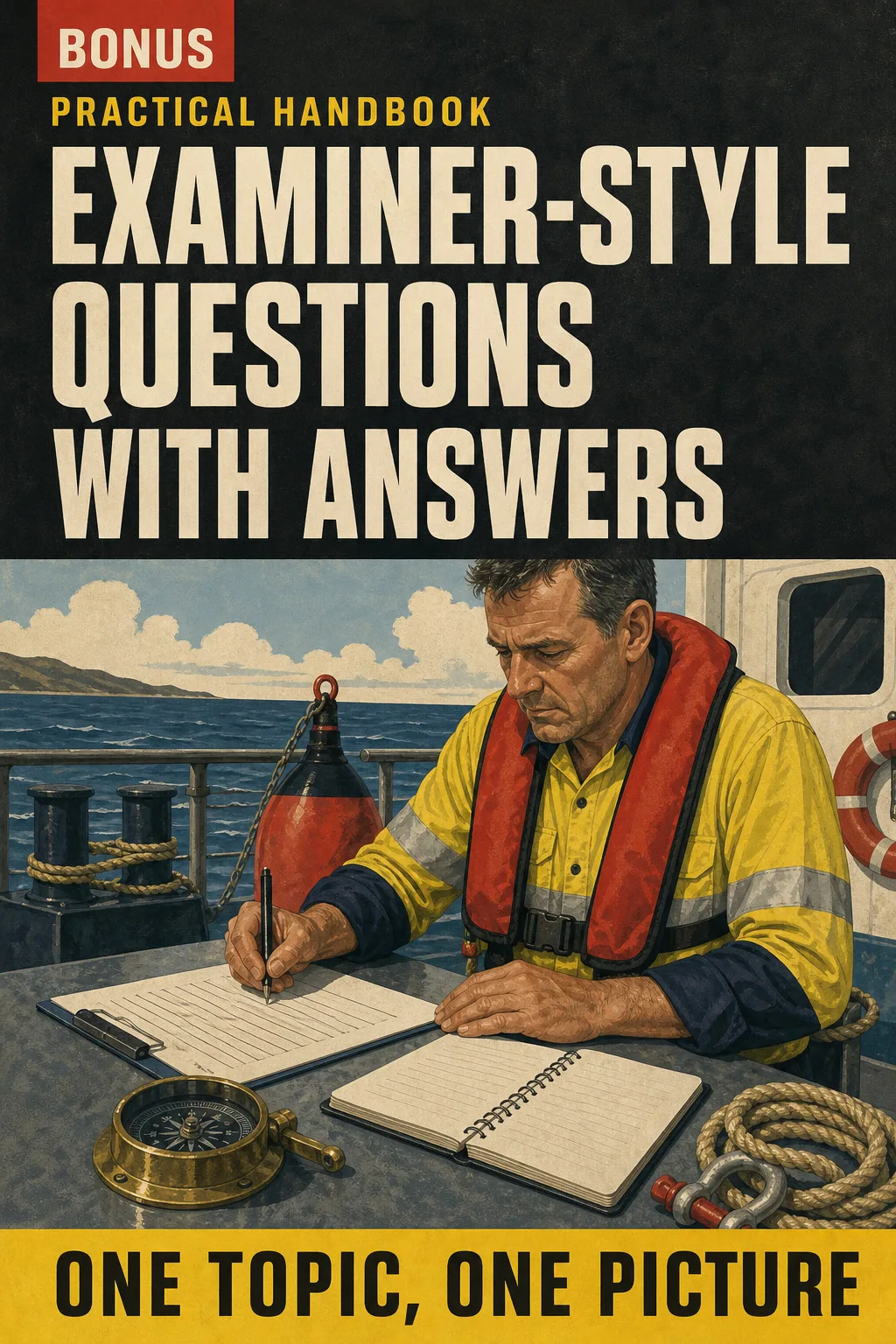
Examiner-Style Questions with Answers

BONUS 1: «Examiner-Style Questions with Answers»

Value on its own: US$ 17.90

Practise out loud the kind of questions an examiner may ask, with a clear model answer for each, so you can hear yourself answer in the same order every time.

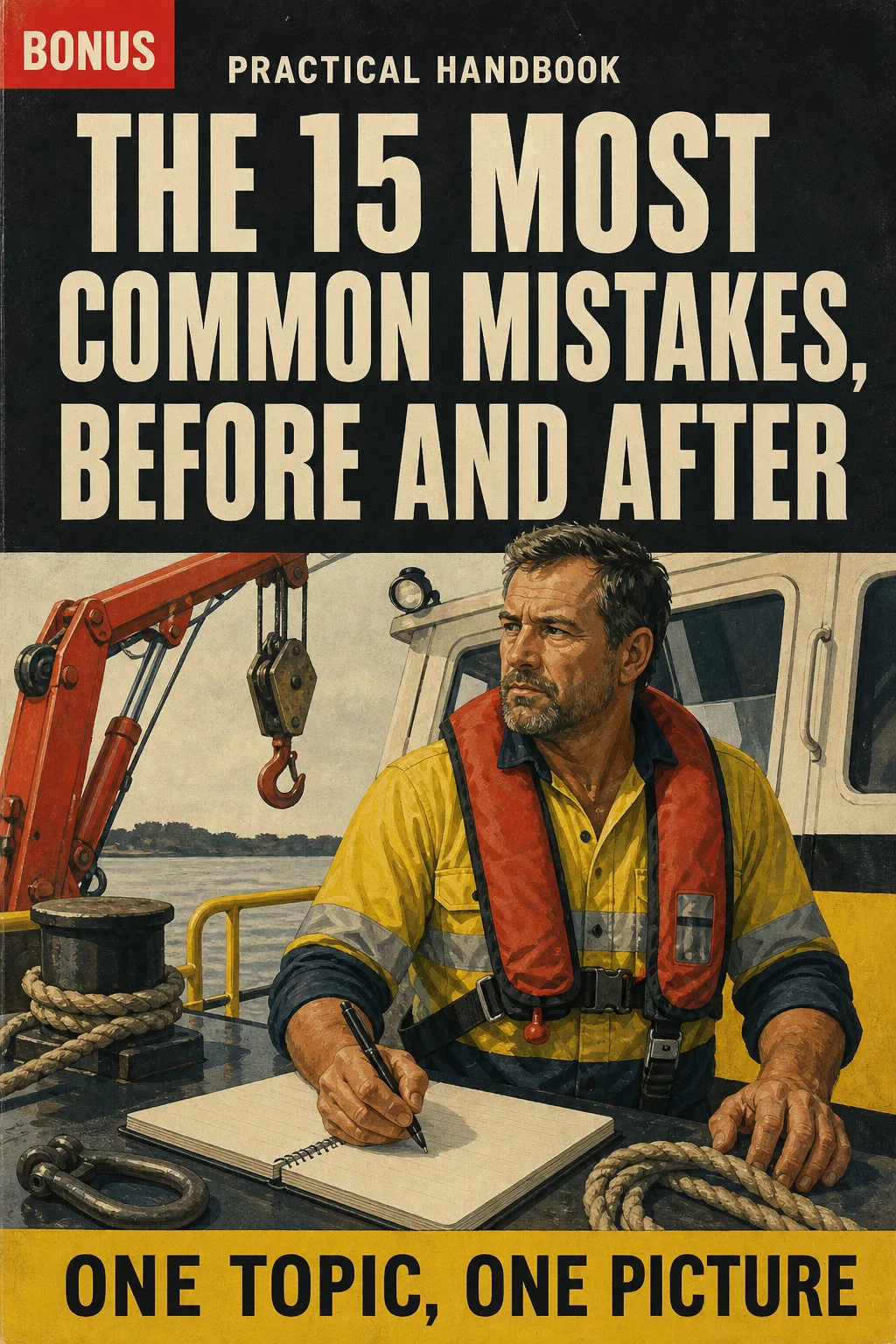
The 15 Most Common Mistakes, Before and After

BONUS 2: «The 15 Most Common Mistakes, Before and After»

Value on its own: US$ 14.90

See the slips that trip people up most often, from mixing up cardinal topmarks to the wrong give-way call, drawn wrong and then right.

Coxswain Grade 1 Illustrated with 2 Free Books

  • Coxswain Grade 1 Illustrated: 66 illustrated pagesUS$ 63
  • BONUS 1: Examiner-Style Questions with AnswersUS$ 17.90
  • BONUS 2: The 15 Most Common Mistakes, Before and AfterUS$ 14.90
  • High-resolution PDF to printIncluded
Total value US$ 95.80
YOUR PRICE:
US$ 27
You save US$ 68.80
YES, I WANT COXSWAIN GRADE 1 ILLUSTRATED FOR US$ 27

📄 This is a digital PDF book sent to your email: nothing is printed or shipped.

Secure purchaseEncrypted payment30-day guarantee

PDF by email: We email you Coxswain Grade 1 Illustrated as a PDF, together with the two free books. It's a single payment: no installments, no extra charges.

Who This Book Is For

You're doing your Certificate II

You're doing your Certificate II

Each rule from your RTO course has its own page with a drawing, so what you covered in class is still clear the next morning.

Your oral exam is close

Your oral exam is close

You go over lights, marks and crossings out loud, always in the same 3 steps: what I see, what it means, what I do.

You already work on deck

You already work on deck

You print it, keep it on board and check a light, a mark or a drill during a quiet moment on the wharf.

Everything You Get Today

US$ 95.80US$ 27
YES, I WANT COXSWAIN GRADE 1 ILLUSTRATED FOR US$ 27

📄 This is a digital PDF book sent to your email: nothing is printed or shipped.

30DAYS
GUARANTEE

30-Day Guarantee

Try Coxswain Grade 1 Illustrated for 30 days, bonus books included.

We refund everything if the file won't open, if the book isn't what you see here, if you were charged twice or if the email doesn't arrive. Just email us.

You pay once. No subscriptions.

Frequently Asked Questions

Is it for me if I've been on the water for years but the commercial ticket is new to me?

Yes. It doesn't treat you as a beginner, and it doesn't assume you know how the oral exam runs. Every rule is drawn, and every answer follows the same 3 steps: what I see, what it means, what I do. That's what turns years on the water into an answer you can say out loud.

Where does the content come from?

From AMSA's published requirements for the Coxswain Grade 1 Near Coastal certificate (Marine Order 505), the collision regulations as they apply in Australia (Marine Order 30) and the IALA Region A buoyage used in Australian waters. The chartwork uses Australian charts, with depths and heights in metres and distances in nautical miles.

Is it official material?

No. It's an independent study guide. It isn't affiliated with or endorsed by AMSA, ACMA or any training organisation.

Does it replace my RTO course?

No, and it doesn't give you any certificate. You still need your course, sea time, practical assessment, first aid and radio certificates. What it adds: the same topics as one page each, drawn, so you can print them and keep them on board, plus examiner-style questions to practise saying the answer out loud before your oral.

Are the practice questions the ones from the exam?

No. They're written for this book in the style of an oral exam. They aren't official questions.

When and how does it arrive?

The book and the 2 bonus books come as a PDF by email, to the address you enter at checkout.

Do I have to pay every month?

No. It's a one-off payment.

Can I have it on paper?

Yes. The PDF is made to print, so you can print the whole book or just the pages you want to keep on board.

How does the refund work?

You have 30 days. We refund everything if the file won't open, if the book isn't what you see on this page, if you were charged twice or if the email doesn't arrive: just email us.

Before You Close This Page

No more rereading the rules with nothing sticking.

Cardinal marks and night lights: you see them drawn and you've got them.

You walk into the oral exam knowing where everything is.

Drawings make studying faster.

The book is right below.

One-time payment: US$ 27 · Guarantee: 30 days · PDF by email

YES, I WANT COXSWAIN GRADE 1 ILLUSTRATED FOR US$ 27

📄 This is a digital PDF book sent to your email: nothing is printed or shipped.